
Why Byzantine Aristocrats Were Military Commanders Not Just Courtiers
In 1071, a Byzantine emperor named Romanos IV Diogenes led a massive army east toward the fortress of Manzikert. He was an aristocrat, a general, and a man who had seized the throne through military success. He lost the battle. He lost the empire. And the story of why he was there in the first place, armored and commanding troops instead of lounging in Constantinople sipping wine from a golden chalice, is the story of how the Byzantine aristocracy worked.
It is not the story you think you know.
The popular image of Byzantine aristocrats is a caricature: silk-robed schemers, eunuchs whispering in palace corridors, courtiers who never saw a battlefield. The word "Byzantine" itself has become shorthand for political intrigue so convoluted it makes Game of Thrones look like a nursery rhyme. But Jean-Claude Cheynet, in his 2023 study "The Byzantine Aristocracy and its Military Function," dismantles that picture with archival precision (Cheynet, 2023). The Byzantine aristocracy, he shows, was not a class of courtiers who occasionally played soldier. It was a class of soldiers who occasionally played courtier.
The distinction matters. It changes how we understand the collapse of the Byzantine Empire, the nature of premodern power, and the strange relationship between military force and social status in a world where the two were supposed to be separate.
The Paper That Rewrites the Aristocracy
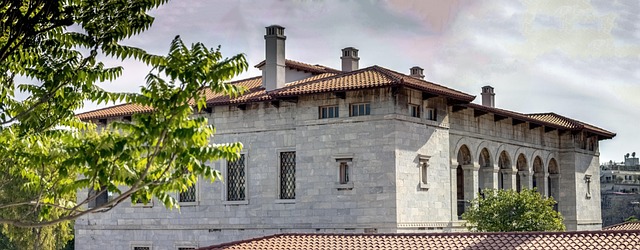
Cheynet's study is a collection of translated articles that span the 8th through 12th centuries, the period when Byzantium was at its most powerful and most vulnerable. The author draws on a massive corpus of Byzantine sources: chronicles, legal documents, military manuals, monastic archives, and the letters of aristocrats themselves. He is not inventing a new theory. He is reading the old evidence with fresh eyes.
The central question is deceptively simple: What did it mean to be an aristocrat in Byzantium? The conventional answer, inherited from earlier historians, was that Byzantine aristocrats were landowners who collected rents and titles, then used their wealth to buy influence at court. Military command was an optional side gig, something you did if you were ambitious or desperate.
Cheynet shows this is backward. "The aristocracy," he writes, "was defined first and foremost by its military function" (Cheynet, 2023). Landownership and court titles were important, but they were secondary. The core identity of the Byzantine aristocrat was that of a soldier. A commander. A man who led troops into battle and expected to die doing it.
How the Army Became the Aristocracy

To understand why, you have to go back to the 7th century. The Arab conquests had shredded the old Roman administrative system. Provinces were lost. The army had to be reorganized. In response, the emperors created the themes, military districts where generals held both military and civil authority. These generals, called strategoi, were the new power brokers.
Over the next two centuries, the strategoi and their families accumulated land, wealth, and hereditary status. But here is the key: they did not become aristocrats because they owned land. They owned land because they were aristocrats, and they were aristocrats because they commanded armies. The military function came first. The social status followed.
Cheynet documents this pattern across multiple generations. The great aristocratic families of the 10th and 11th centuries the Phokades, the Skleroi, the Komnenoi were all military dynasties. They produced generals, not bureaucrats. When a Phokas or a Skleros appeared in Constantinople, it was not to attend a banquet. It was to demand a command, or to threaten rebellion if they did not get one.
The Exception That Proves the Rule
There were, of course, civilian aristocrats. Cheynet acknowledges this. But he argues that they were a distinct minority, and that their status was always precarious. A civilian aristocrat might hold the title of protovestiarios (keeper of the imperial wardrobe) or logothetes (financial administrator), but he could never match the prestige of a man who had actually led an army.
The civilian families, Cheynet notes, were often the ones who married into military families to boost their standing. They were not the core of the aristocracy. They were the periphery trying to get to the center.
Why the Emperor Needed Generals Who Were Also Nobles

This raises an obvious question: If the emperor was the supreme commander, why did he let powerful military aristocrats exist at all? Why not appoint professional soldiers from humble backgrounds, men who owed everything to the throne?
The answer is that the Byzantine state did not have the administrative capacity to run a professional officer corps. There was no West Point, no military academy, no system of standardized promotion. The only way to find competent commanders was to draw from the class of men who had the resources to train, equip, and feed themselves as soldiers. Those men were the aristocracy.
Cheynet explains that the emperor's dependence on aristocratic generals was a structural feature of the Byzantine state, not a bug that could be fixed (Cheynet, 2023). The empire was too large, too threatened, and too poor to maintain a standing army of professionals. It relied on local magnates to raise troops from their own estates and lead them in battle. In return, those magnates got tax exemptions, land grants, and the right to pass their status to their sons.
The Risk of Rebellion
The system worked, but it was unstable. An aristocratic general who was popular with his troops and wealthy from his estates was also a potential usurper. The history of Byzantium is littered with generals who became emperors by marching on Constantinople. Romanos IV Diogenes was one of them. So was Alexios I Komnenos, who founded the Komnenian dynasty after a military coup.
Cheynet's analysis makes sense of this pattern. The aristocrats were not rebels because they were greedy or ambitious. They were rebels because their entire identity was built on military command. If the emperor denied them a command, or if he appointed a rival, they had no other way to maintain their status. Rebellion was not a choice. It was a rational response to a system that gave them no other options.
The Battle of Manzikert and the Failure of the System
This brings us back to 1071. Romanos IV Diogenes was a military aristocrat who had seized the throne in 1068. He spent his short reign trying to restore the empire's military power, which had been eroded by years of civil war and administrative decay. He led three campaigns against the Seljuk Turks. The third one ended at Manzikert.
Cheynet does not focus on the battle itself, but his framework explains why it was so catastrophic. The Byzantine army at Manzikert was not a unified force. It was a collection of private armies raised by aristocratic commanders, many of whom had personal grudges against Romanos. When the battle turned against the emperor, his own generals abandoned him. Some of them, like Andronikos Doukas, actively sabotaged the campaign.
The result was a defeat that should have been a setback but turned into a disaster. Romanos was captured. The empire descended into civil war. Within a decade, the Seljuks had overrun most of Anatolia, the empire's heartland.
Cheynet's interpretation is that Manzikert was not a military failure. It was a structural failure. The system that made aristocrats into generals also made them into potential traitors. The emperor could not trust his own commanders because they were not professional soldiers. They were rivals.
What the Research Does Not Prove
This is a good place to pause and acknowledge what Cheynet's study does not claim.
It does not claim that all Byzantine aristocrats were competent generals. Many were mediocre. Some were disastrous. The point is that military command was the norm, not the exception. Even bad generals were still generals.
It does not claim that the Byzantine Empire fell because of its aristocratic military system. The empire survived for another four centuries after Manzikert. The Komnenian restoration in the 12th century showed that the system could work when emperors managed their aristocrats effectively.
It does not claim that the Byzantine aristocracy was unique. Similar patterns of military aristocracy existed in medieval Europe, in the Islamic world, and in China. The difference was that Byzantium had a stronger central state, which created a more explicit tension between the emperor's authority and the aristocrats' military power.
The open question, which Cheynet leaves for other scholars, is whether the system was ultimately sustainable. Could the Byzantine Empire have reformed its military to rely on professional soldiers instead of aristocratic levies? The answer is probably no, given the empire's financial constraints. But it is a question worth asking.
The Data That Supports the Argument
Cheynet's evidence is not just narrative. He uses quantitative analysis of surviving documents to show that the vast majority of known Byzantine aristocrats held military commands at some point in their careers. He examines the lists of strategoi for the themes, the rosters of generals in imperial campaigns, and the genealogies of prominent families.
The numbers are striking. In the 10th century, over 80 percent of known aristocratic families had at least one member who served as a strategos or a higher military commander (Cheynet, 2023). The remaining 20 percent were either newly ennobled families who had not yet produced a general, or families who had lost their military status and were in decline.
Cheynet also analyzes the correspondence of aristocrats. Their letters are filled with discussions of military tactics, troop movements, and battlefield logistics. They write about their horses, their armor, their wounds. They do not write about court ceremonies or administrative procedures. The evidence from their own words confirms that they saw themselves as soldiers first.
What This Actually Means
The implications of Cheynet's research go beyond Byzantine history. They touch on how we think about premodern societies, the relationship between power and violence, and the nature of elite identity.
- ▸The Byzantine aristocracy was not a courtier class. It was a warrior class that happened to live in a palace. The silk robes and golden chalices were the reward for military service, not the basis of it.
- ▸The emperor's power was always conditional. He could not rule without the aristocratic generals, but he could not trust them either. The system was a permanent balancing act between dependence and suspicion.
- ▸The collapse of the Byzantine military in the 11th century was not caused by bad strategy or weak emperors. It was caused by the structural tension between the emperor's need for competent generals and the aristocrats' need for independent power.
- ▸The Komnenian restoration succeeded because Alexios I Komnenos understood this tension. He did not try to eliminate the aristocratic military system. He co-opted it, binding the great families to his dynasty through marriage and patronage.
- ▸The lesson for modern readers is that elites are defined by what they actually do, not by what they consume. The Byzantine aristocrat was a commander because he commanded. The title and the land followed. Status was a byproduct of function, not the other way around.
The next time you hear someone describe a system as "Byzantine," ask them what they mean. If they mean convoluted and decadent, they are wrong. The Byzantine aristocracy was not decadent. It was violent, ambitious, and deeply practical. It was built for war, not for court. And that is why it lasted as long as it did, and why it finally failed.
References
- [1]Jean-Claude Cheynet (2023). The Byzantine Aristocracy and its Military FunctionDOI· 126 citations