
The Skill Your Doctor Never Mentioned
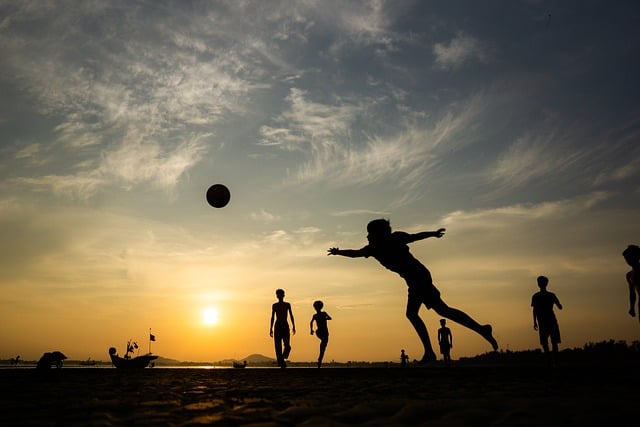
You know the feeling. You walk past a group of kids playing tag, and one of them stumbles, falls, and bounces back up without a second thought. No hesitation. No checking for scrapes. Just movement, instinct, joy.
Now think about the last time you tried something new with your body. A dance class. A pickup soccer game. Maybe just running for a bus. That split second where your brain asks: Can I do this? That tiny pause before you move.
That pause is the difference between a body that knows itself and one that doesn't. And according to a growing body of research, that difference might be the most overlooked predictor of whether you stay active for the rest of your life.
A team of researchers led by Johannes Carl from Friedrich-Alexander-University Erlangen-Nürnberg just completed the most comprehensive survey of what they call "physical literacy" across Europe. They assembled experts from 25 countries, analyzed documents, ran surveys, and compared notes. What they found is both hopeful and deeply frustrating: Europe is sitting on a concept that could transform public health, but almost nobody is using it properly (Carl et al., 2022).
What Is Physical Literacy, Actually?

Here is the problem with the term "physical literacy." It sounds like jargon. Like something a committee invented to make gym class sound more academic. But the researchers behind this study are not talking about vocabulary tests or reading scores. They are talking about something far more fundamental.
Physical literacy, as the authors define it, is "a holistic concept embracing different person-centered qualities physical, cognitive, and affective/psychological necessary to lead physically active lifestyles" (Carl et al., 2022). In plain language: it is not just whether you can run or jump. It is whether you want to. Whether you know how to learn new movements. Whether you feel confident enough to try.
Think of it like language literacy. A literate person does not just know the alphabet. They can read a sentence, understand its meaning, and decide whether they agree with it. Physical literacy works the same way. A physically literate person does not just know how to kick a ball. They understand why movement matters, they feel motivated to move, and they can adapt their body to new situations without panic or shame.
The researchers found that this concept is gaining serious traction globally. But Europe presents a strange paradox. The continent has some of the most advanced sports science in the world. It has public health systems that actually care about prevention. And yet, physical literacy remains stuck in a kind of academic limbo. It gets attention in research papers but rarely makes it into actual policy or practice (Carl et al., 2022).
What the Study Actually Did

The research team did something ambitious. They recruited one expert from each of 25 European countries. These were not random people. They were academics and practitioners who had published on physical literacy or worked directly with it. The experts first wrote detailed reviews of how physical literacy was being handled in their home countries across three domains: research, practice, and policy.
Then the team did something clever. They used a "comparative document analysis" with a "transnational four-eyes principle." That means two different researchers read each country report and compared them systematically. They looked for patterns, contradictions, and gaps. After that, they sent the experts a quantitative survey to validate the themes that emerged from the document analysis.
The result was ten distinct themes organized around four categories: the concept itself, research, practice and policy, and future prospects (Carl et al., 2022).
The Messy Reality: Europe Is Not One Place
If you expected a neat story where Scandinavian countries lead the way and everyone else follows, you will be disappointed. The authors found a "heterogeneous PL situation in Europe" (Carl et al., 2022). Some countries have robust research programs. Others have strong grassroots implementation but almost no academic work. A few have government policies that mention physical literacy. Most do not.
The researchers identified three major factors driving this fragmentation.
The Translation Problem
First, language. Physical literacy is an English term, and it does not translate neatly. Some languages have words that come close. Others do not. The authors note that "linguistic issues e.g., translations" were a major barrier (Carl et al., 2022). If you cannot even name the concept in your own language, how do you teach it? How do you fund it? How do you measure it?
Countries that found good translations tended to adopt the concept faster. Countries that struggled with translation either ignored it or reinvented it in ways that confused everyone.
The Competition Problem
Second, Europe already has established concepts that overlap with physical literacy. The authors found that many countries have "established yet not identical concepts" (Carl et al., 2022). In Germany, there is Bewegungskompetenz (movement competence). In France, culture sportive (sport culture). In Nordic countries, idræt (a broad concept of physical culture that includes sport, dance, and outdoor life).
These existing concepts are not wrong. They just are not physical literacy. And because they already have institutional support, research funding, and public recognition, physical literacy struggles to gain a foothold. Why would a ministry of education adopt a new framework when it already has one that works, even if the old framework is narrower?
The Implementation Gap
Third, and most troubling, is the gap between research and reality. The authors found that "despite growing scholarly attention, PL hesitantly permeates practice and policy in most countries" (Carl et al., 2022). Academics are writing papers. Conferences are happening. But in schools, community centers, and government offices, physical literacy remains a whisper.
This is not unusual in public health. There is often a lag between what researchers know and what actually happens in the world. But the authors suggest something more structural is at play. Physical literacy is not a simple intervention you can package and deliver. It is a philosophy. It requires changing how teachers teach, how coaches coach, and how parents think about their children's movement.
That kind of change is slow. And it is expensive.
Why This Matters More Than You Think
You might be wondering: so what? If Europe already has ways to get people moving, why do we need a new concept?
Here is why it matters. Traditional approaches to physical activity focus on outcomes. They measure how many minutes you exercise, how many steps you take, how many pushups you can do. Those metrics are useful, but they miss something essential. They do not ask whether you like moving. They do not ask whether you feel competent. They do not ask whether you will keep moving when the gym membership expires or the fitness tracker breaks.
Physical literacy flips the question. Instead of asking "how much do you move?", it asks "are you the kind of person who moves?" That shift from behavior to identity is powerful. Research in psychology shows that identity-based habits stick longer than outcome-based ones. If you see yourself as a physically literate person, you do not need external motivation to exercise. You just do it, the way a literate person does not need a reward to read a book.
The authors of this study are essentially arguing that Europe's current approach is missing this identity piece. Countries focus on building sports programs or building parks or building gyms. But they do not focus on building people who feel capable and motivated to move for their entire lives (Carl et al., 2022).
What the Study Does Not Prove
Let me be honest about the limits of this research. The study is not a randomized trial. It is not a population survey. It is a synthesis of expert opinions, carefully collected and validated, but still opinions. The authors acknowledge this. They call it a "complementary mixed-methods design," which is academic code for "we did our best with the data we had" (Carl et al., 2022).
The sample of 25 countries is impressive, but it is not every European country. Some regions are missing. And the experts themselves come from academic or policy backgrounds. They might be biased toward seeing physical literacy as important because it is their field.
More importantly, the study does not prove that physical literacy actually leads to better health outcomes. It assumes that if people become more physically literate, they will be more active, and that will improve their health. That chain of reasoning makes intuitive sense, but it has not been rigorously tested at scale. The authors call for "empirical work" to fill this gap (Carl et al., 2022).
So this is not a final answer. It is a diagnosis. A map of where things stand. And a warning that Europe is not doing enough.
The Bright Spots: Where It Is Working
Not every country is failing. The researchers identified some places where physical literacy has gained real traction. These success stories offer clues about what works.
In Wales, physical literacy has been embedded in the national curriculum. Teachers are trained in it. Schools assess it. The government funds it. The authors note that Wales has become something of a model for other countries (Carl et al., 2022).
In Finland, the concept aligns naturally with the country's emphasis on holistic education and outdoor play. Finnish schools already prioritize movement breaks, free play, and noncompetitive physical activity. Physical literacy felt like a natural extension of what they were already doing.
In Scotland, a national physical literacy framework has been developed and is being rolled out across schools and community programs. The Scottish approach emphasizes that physical literacy is for everyone, not just athletes.
What these countries share is not wealth or size. It is intentionality. They did not just add physical literacy to a list of goals. They changed their systems. They trained teachers. They aligned policies. They made it a priority rather than an afterthought.
The Path Forward: What Europe Needs to Do
The authors are cautiously optimistic. They found that "the experts largely anticipate increasing popularity of PL for the future" (Carl et al., 2022). But popularity is not the same as implementation.
The researchers suggest a two-track approach. First, academics need to do more conceptual and linguistic work. They need to agree on definitions, create good translations, and develop reliable measurement tools. Without that foundation, physical literacy will remain a vague idea that nobody can implement consistently.
Second, practitioners and policymakers need to start small but start now. You do not need a perfect framework to begin. You need a pilot program, a committed teacher, a willing community center. The authors call for "intensifying academic activities before PL may gain further access into practical and political spheres" (Carl et al., 2022). But that does not mean waiting. It means doing both at once.
What This Actually Means
Here is the takeaway. Not the academic summary, but the practical reality.
- ▸If you are a parent, stop asking your child how many goals they scored. Ask them how it felt to run. Ask them what new move they tried. You are building their physical literacy, not their trophy case.
- ▸If you are a teacher, do not treat physical education as a break from learning. Treat it as learning. Teach kids how their bodies work. Teach them that falling is normal. Teach them that movement is not a punishment or a chore.
- ▸If you are a policymaker, stop funding only elite sports and gym infrastructure. Fund programs that build confidence, competence, and motivation in people who do not already love exercise. The people who already move do not need your help. The people who do not move need a reason to start.
- ▸If you are an adult who has given up on exercise, you are not lazy. You might just be physically illiterate. And that is not your fault. Nobody taught you. But you can learn. Start with something that feels good. Not something that looks impressive. Something that makes you want to do it again tomorrow.
- ▸If you work in public health, stop measuring only minutes and steps. Start measuring whether people feel capable. Whether they feel confident. Whether they feel like movement belongs to them. Those are the numbers that predict lifelong health.
The researchers who wrote this paper are not selling a miracle cure. They are offering a diagnosis and a direction. Europe has a problem with physical inactivity. The old solutions are not working. Physical literacy is not the only answer, but it might be the one we have been ignoring.
And that pause you feel when you think about trying something new? The one between "I could" and "I won't"? Physical literacy is what closes that gap. It is the skill of saying yes to your own body.
References
- [1]Johannes Carl, Anna Bryant, Lowri C. Edwards, Gillian Bartle (2022). Physical literacy in Europe: The current state of implementation in research, practice, and policy. Journal of Exercise Science & FitnessDOI· 81 citations