
Generative AI Will Reshape Innovation Management
Imagine you are a product manager at a consumer electronics company. Your team has spent eighteen months developing a new smart home device. You have run focus groups, iterated on prototypes, and filed patents. Then, one morning, a competitor releases a device that does everything yours does, but better. It was designed in six weeks. The industrial designer used Midjourney to generate 400 concept sketches in an afternoon. The engineer used ChatGPT to write the firmware. The patent lawyer used a large language model to draft claims that anticipated your own.
This is not a hypothetical. This is what happens when generative AI enters the innovation pipeline. And according to a new study by Marcello Mariani of the University of Reading and Yogesh Dwivedi of Swansea University, we are only beginning to understand how profoundly GenAI will change the way organizations invent, develop, and commercialize new ideas (Mariani & Dwivedi, 2024).
The authors did not just review the literature. They assembled a panel of leading innovation management scholars and ran a Delphi study. That is a structured forecasting method where experts answer questions in multiple rounds, see each other's responses, and converge on consensus. The result is a map of ten research themes that will define the next decade of innovation management. Some of them confirm what you might suspect. Others will make you uncomfortable.
The Machine That Designs the Machine

How GenAI Changes What "Innovation" Even Means
Innovation is not a single thing. It is a category that includes incremental improvements to existing products, radical breakthroughs that create new markets, and architectural shifts that rearrange how components work together. For decades, management scholars have treated these as distinct phenomena requiring different organizational structures, funding models, and talent strategies. Mariani and Dwivedi's first theme asks a straightforward question: does GenAI change the distribution of innovation types?
The early evidence suggests yes. GenAI appears disproportionately good at generating combinatorial innovation. That is the kind that recombines existing ideas in novel ways. Think of the iPhone, which combined a phone, a music player, and an internet communicator. GenAI models, trained on vast corpora of human knowledge, are essentially recombination engines. They can scan millions of patents, research papers, and product descriptions, then propose combinations no human would have considered.
But here is the catch. The authors note that GenAI may be weaker at generating radical innovation that requires stepping outside existing knowledge domains (Mariani & Dwivedi, 2024). A model trained on everything ever written about chemistry will not spontaneously invent a new paradigm that invalidates chemistry textbooks. It can only recombine what it has seen. This creates a strategic puzzle for firms. If you rely too heavily on GenAI for ideation, you may optimize for combinatorial innovation while starving your pipeline of the truly radical breakthroughs that come from human intuition, serendipity, or deliberate constraint-breaking.
The Dominant Design Problem
Every technology industry eventually converges on a dominant design. The QWERTY keyboard. The gasoline engine. The smartphone form factor. Once a dominant design emerges, innovation shifts from product architecture to incremental improvement of components. Mariani and Dwivedi's second theme asks whether GenAI accelerates or disrupts this process.
The answer is probably both. GenAI can rapidly explore the design space around a new technology, testing thousands of variations and identifying the most promising configurations. This could compress the time it takes for an industry to converge on a dominant design from years to months. But GenAI can also destabilize existing dominant designs by generating alternatives that are equally viable but structurally different. The authors suggest that we may see a new phenomenon: "design multiplicity," where multiple dominant designs coexist because GenAI makes it too cheap to maintain parallel development paths (Mariani & Dwivedi, 2024).
For managers, this means the window for establishing a standard is shrinking. You cannot spend five years refining your design before releasing it. By then, a GenAI assistant will have generated a hundred viable alternatives, and your competitors will have tested them all.
Creativity Without a Creator
Scientific and Artistic Innovation by Algorithm
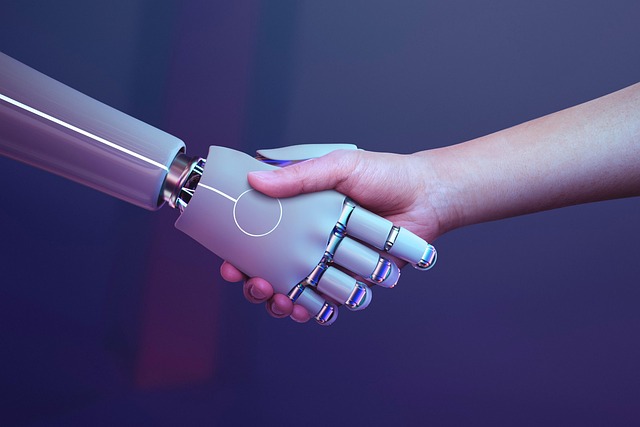
The third theme is the one that will provoke the most anxiety in creative professionals. Mariani and Dwivedi examine GenAI's capacity for scientific and artistic creativity. The Delphi panel largely agreed that GenAI can produce outputs that are indistinguishable from human creative work in certain domains. But they also identified a crucial distinction between "generative" creativity and "transformative" creativity.
Generative creativity produces variations within an established style or paradigm. A GenAI model can write a sonnet in the style of Shakespeare because it has ingested all of Shakespeare's sonnets. Transformative creativity breaks the paradigm. It invents a new style. The authors point out that there is no evidence GenAI can do the latter (Mariani & Dwivedi, 2024).
This matters for innovation management because most corporate innovation is generative, not transformative. Companies do not need to invent a new artistic movement. They need to design a better dashboard layout, write clearer user manuals, or generate more effective marketing copy. GenAI can do all of those things. The question is whether organizations will restructure their creative workflows around this capability or treat it as a novelty.
The Intellectual Property Nightmare
Theme four is where the theoretical meets the litigious. GenAI-enabled innovation raises profound intellectual property questions. Who owns an invention when the inventor was a prompt engineer? What happens when a GenAI model generates a design that infringes on a patent it was trained on? The authors do not offer answers, but they frame the problem clearly: current IP law is built on the assumption of human agency (Mariani & Dwivedi, 2024). A machine cannot be an inventor. But if the machine is the one doing the inventing, the legal construct breaks down.
This is not an abstract concern. The U.S. Patent and Trademark Office has already received applications listing AI systems as inventors. Courts have rejected them. But the technology is moving faster than the law. Mariani and Dwivedi predict that we will see a wave of innovation in IP strategy itself. Firms may develop "AI aware" patent portfolios that anticipate and block machine generated inventions. Others may open source their GenAI generated designs, creating a commons that competitors cannot patent.
The Product Development Time Machine

From Months to Minutes
Theme five focuses on new product development. This is where the rubber meets the road for most organizations. The authors synthesize evidence that GenAI can compress the NPD cycle at every stage. Concept generation, prototyping, testing, and launch can all be accelerated by orders of magnitude.
Consider prototyping. Traditionally, a design team creates a physical prototype, tests it, learns from the results, and iterates. The cycle takes weeks. With GenAI, a team can generate a thousand virtual prototypes in a day, simulate their performance, and select the top candidates for physical testing. The authors note that this shifts the bottleneck from idea generation to idea evaluation (Mariani & Dwivedi, 2024). The problem is no longer "how do we think of something new?" but "how do we choose which of these ten thousand options to pursue?"
This is a genuine organizational challenge. Most firms are not structured to handle high volume, high velocity decision making. They have stage gate processes designed for a world where ideas were scarce. In a world where ideas are abundant, the limiting factor is managerial attention. Firms that cannot adapt their evaluation processes will drown in options.
Unimodal versus Multimodal
Theme six introduces a technical distinction with strategic implications. Unimodal GenAI models work with a single type of data: text, image, or sound. Multimodal models work across types. A unimodal text model can write a product description. A multimodal model can look at a product image, read the specifications, and generate a marketing video.
The authors argue that multimodal GenAI will produce different innovation outcomes than unimodal models (Mariani & Dwivedi, 2024). Specifically, multimodal models enable "cross modal analogies" that are difficult for humans. A designer might never think to apply a pattern from textile weaving to a circuit board layout. A multimodal model trained on both domains might make that connection automatically.
For innovation managers, this suggests that the choice of GenAI tool is not just a technical decision. It is a strategic one. Unimodal tools optimize for depth within a domain. Multimodal tools optimize for breadth across domains. The right choice depends on whether your innovation strategy favors incremental improvement or architectural recombination.
The Ecosystem Shifts
Who Has Agency in an AI Mediated World?
Theme seven is the most philosophical of the ten. Mariani and Dwivedi ask who has agency in innovation ecosystems that include GenAI. Agency is the capacity to act independently and make decisions. In a traditional ecosystem, humans have agency. Firms have agency. Machines do not. But as GenAI systems become capable of generating novel designs, writing patent claims, and even negotiating with other AI systems, the line blurs.
The authors suggest that we may see the emergence of "hybrid agency" where humans and AI systems jointly determine innovation outcomes (Mariani & Dwivedi, 2024). This is not the same as automation, where a machine executes a human determined task. Hybrid agency means the machine influences the goal, not just the path. A GenAI system might propose a new product category that no human had considered, effectively setting the innovation agenda.
This creates a new management challenge. How do you manage a system that has partial agency? You cannot give it a checklist. You have to negotiate with it. The authors call for research on "AI management" as a distinct discipline, separate from both human management and traditional IT management.
The Regulators Are Coming
Theme eight is about the policy response. The Delphi panel was clear that existing regulatory frameworks are inadequate for GenAI enabled innovation. Antitrust authorities worry about market concentration. If GenAI models are trained on proprietary data held by a few large firms, those firms gain an insurmountable advantage in innovation speed. Policymakers worry about safety. If a GenAI system designs a product that fails catastrophically, who is liable?
The authors predict a regulatory patchwork. Some jurisdictions will impose strict requirements for human oversight of AI generated innovations. Others will take a hands off approach to attract investment. This regulatory fragmentation will itself become a factor in innovation strategy. Firms will need to decide whether to develop separate product lines for different regulatory regimes or to build "regulatory proof" GenAI systems that satisfy the strictest rules everywhere.
The Dark Side
Bias, Misuse, and Unethical Innovation
Theme nine is the one that keeps innovation managers up at night. GenAI can produce biased innovations. If a model is trained on historical data that reflects existing inequalities, it will generate designs that perpetuate those inequalities. A GenAI system trained on medical data from predominantly white populations might design diagnostic tools that work poorly for people of color. A system trained on engineering textbooks written by men might generate product designs that ignore ergonomic needs of women.
The authors note that bias in GenAI is not a bug. It is a feature of how the models work. They learn patterns from training data. If the training data contains biased patterns, the outputs will be biased. The solution is not better algorithms. It is better data, which means deliberate curation of training sets that represent diverse populations and perspectives (Mariani & Dwivedi, 2024).
There is also the problem of misuse. GenAI can generate fake product reviews, counterfeit designs, and misleading marketing content. It can be used to reverse engineer competitors' products by analyzing publicly available information. The authors call for research on "innovation ethics" as a formal discipline within management studies, not just a compliance checkbox.
The Organization Itself Must Change
Theme ten is where all the others converge. GenAI enabled innovation requires different organizational structures. The traditional functional organization, where R&D, marketing, and manufacturing operate in silos, is too slow. The authors argue for "fluid organizational boundaries" where GenAI systems act as integrators, connecting information across departments in real time (Mariani & Dwivedi, 2024).
This is not just about creating a new department. It is about rethinking what a department is. If a GenAI system can generate a marketing plan from engineering specifications, do you need a separate marketing team? If it can write code from product requirements, do you need a separate engineering team? The answer is probably yes, but the roles change. Humans move from doing the work to evaluating and refining the work that GenAI produces.
What This Research Does Not Prove
The Mariani and Dwivedi study is a forecast, not an experiment. The Delphi methodology captures expert opinion, but experts can be wrong. The authors are transparent about this. They note that the ten themes are research opportunities, not proven findings. Some may turn out to be dead ends. Others may be overtaken by events.
The study also does not address the question of whether GenAI will increase or decrease overall innovation output. It is possible that GenAI will lead to a flood of low quality innovations that overwhelm markets and confuse consumers. It is also possible that the best innovations will still come from human insight, with GenAI serving as a junior assistant rather than a lead inventor.
And the study does not resolve the fundamental tension between efficiency and novelty. GenAI is optimized for efficiency. It generates the most probable output given its training. But innovation often requires the improbable. The most important innovations are the ones that defy expectations. Whether GenAI can produce that kind of surprise remains an open question.
What This Actually Means
- ▸Redesign your evaluation process before you scale your ideation process. If you invest in GenAI for idea generation without upgrading your ability to evaluate ideas, you will create a bottleneck. You need faster, cheaper, and more objective ways to test and select innovations. Consider automated prototyping, simulation based testing, and AI assisted market analysis.
- ▸Treat GenAI as a strategic choice, not a tool purchase. The type of GenAI you use determines the type of innovation you get. Unimodal models optimize for depth. Multimodal models optimize for breadth. Choose based on your innovation strategy, not on what is trendy.
- ▸Prepare for regulatory fragmentation. Different countries will regulate GenAI innovation differently. Build flexibility into your product architecture so you can adapt to different rules. Consider building a "minimum viable compliance" system that meets the strictest regulations everywhere.
- ▸Invest in data curation, not just model selection. The quality of your GenAI outputs depends on the quality of your training data. Biased data produces biased innovations. Spend as much time cleaning and diversifying your data as you spend tuning your models.
- ▸Redefine your human roles around evaluation and judgment. GenAI can generate, but humans must evaluate. Shift your talent strategy from hiring creators to hiring critics. The most valuable employees will be the ones who can look at a GenAI generated design and say, "This is good, but here is how to make it great."
References
- [1]Marcello M. Mariani, Yogesh K. Dwivedi (2024). Generative artificial intelligence in innovation management: A preview of future research developments. Journal of Business ResearchDOI· 312 citations