
The Photograph That Took Five Years to Develop
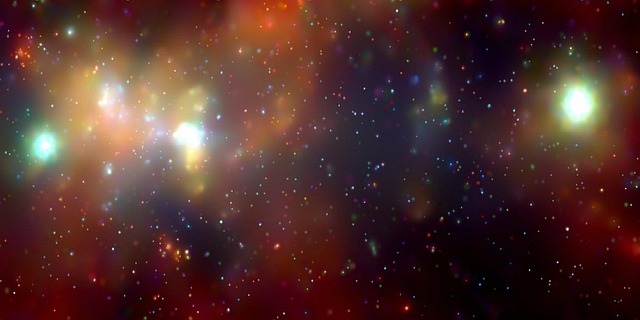
On May 12, 2022, scientists released an image that looked like a glowing orange donut against a black background. It was blurry. It was pixelated. And it took a global collaboration of more than 300 researchers, eight radio telescopes scattered across four continents, and five years of computation to produce.
But what you were actually seeing was something no human had ever seen before: the shadow of a supermassive black hole at the center of our own galaxy, 27,000 light years away. The object is called Sagittarius A, or Sgr A for short. It has the mass of 4 million suns crammed into a space smaller than Mercury's orbit. And until the Event Horizon Telescope (EHT) collaboration released their results in a suite of papers published in The Astrophysical Journal Letters, its existence had only been inferred indirectly.
The lead paper, authored by Kazunori Akiyama, A. Alberdi, W. Alef, Juan Carlos Algaba, and the entire EHT collaboration, announced a finding that had been anticipated for decades: "We present the first Event Horizon Telescope (EHT) observations of Sagittarius A*" (Akiyama et al., 2022). That sentence is a masterpiece of understatement. What they actually did was photograph a black hole.
Here is what that means, why it took so long, and what it changes.
Why Photographing a Black Hole Is Like Trying to Take a Selfie With a Hurricane

The physics of black hole imaging is deeply counterintuitive. Black holes, by definition, emit no light. You cannot photograph a black hole any more than you can photograph the color black. What the EHT images is the black hole's "shadow" the dark silhouette against the glowing ring of superheated gas and plasma that swirls around it at near light speed. That ring is called the accretion disk. It is not actually a ring. General relativity predicts that the black hole's gravity bends light from the far side of the disk around the hole, creating a circular structure that is actually a gravitational mirage. The diameter of that ring, as measured by the EHT, is 51.8 ± 2.3 microarcseconds (Akiyama et al., 2022). To understand how small that is: a microarcsecond is one billionth of a degree on the sky. The ring's apparent size from Earth is roughly equivalent to a donut on the surface of the moon.
That is the easy part. The hard part is that Sgr A* is not a cooperative subject.
The black hole at the center of M87, which the EHT imaged in 2019, is a monster. It weighs 6.5 billion solar masses, and its accretion disk changes slowly, over days to weeks. Sgr A is 1,500 times less massive. Its accretion disk changes on timescales of minutes. The EHT's observations in April 2017 captured Sgr A over several nights, but within a single night, the emission region varied so much that the data looked like a series of photographs of a different object each time. "The EHT data resolve a compact emission region with intrahour variability," the authors wrote (Akiyama et al., 2022). That variability nearly broke the imaging algorithms.
The team had to develop entirely new calibration methods to account for the fact that Sgr A* was changing faster than their telescopes could take a snapshot. They ended up averaging the data in 10-second chunks, then using statistical models to reconstruct what a "typical" image would look like. The result is not a photograph in the ordinary sense. It is a composite, a statistical inference, a best guess at the average appearance of a thing that never sits still.
What the Ring Actually Tells Us

The ring is not just a pretty picture. It is a measurement that carries enormous physical information. The diameter of 51.8 microarcseconds, combined with the distance to the Galactic center (about 8 kiloparsecs), gives a direct measurement of the black hole's mass: approximately 4 million solar masses. That number matches, within error bars, the mass inferred from two decades of tracking individual stars orbiting the Galactic center using infrared telescopes. This is not a coincidence. It is a confirmation that the object at the center of our galaxy is indeed a black hole, and that general relativity works on scales from stellar orbits (thousands to hundreds of thousands of gravitational radii) down to the event horizon itself (Akiyama et al., 2022).
The ring also has a subtle brightness asymmetry. One side is slightly brighter than the other. This is expected from a rotating black hole. General relativity predicts that gas moving toward us appears brighter due to relativistic beaming, while gas moving away appears dimmer. The asymmetry, combined with the ring's shape, allows the team to constrain the black hole's spin axis and the orientation of the accretion disk. Their models disfavor scenarios where the black hole is viewed at high inclination (greater than 50 degrees from face-on), as well as nonspinning black holes and those with retrograde accretion disks (Akiyama et al., 2022). In plain language: Sgr A* is probably spinning, and we are looking at it from a relatively face-on angle.
The Comparison That Proves Einstein Right Again
One of the most striking results in the paper is not about Sgr A at all. It is about the comparison between Sgr A and M87. The two black holes could not be more different in scale. M87 is 1,500 times more massive. Its event horizon is 1,500 times larger. Its accretion disk changes 1,500 times more slowly. And yet, when you scale the images by mass, they look nearly identical.
"A comparison with the EHT results for the supermassive black hole M87* shows consistency with the predictions of general relativity spanning over three orders of magnitude in central mass" (Akiyama et al., 2022). This is not a trivial check. General relativity has been tested in the solar system, in binary pulsars, and in gravitational wave events. But those tests probe different regimes of gravity. The EHT images test gravity in the strong field regime, where the curvature of spacetime is extreme, and they do it for two objects that differ in mass by a factor of 1,500. The fact that the predictions hold across that range is a powerful statement about the universality of Einstein's equations.
How They Actually Did It
The EHT is not a single telescope. It is an array of eight observatories: the Atacama Large Millimeter/submillimeter Array (ALMA) in Chile, the Atacama Pathfinder Experiment (APEX), the IRAM 30-meter telescope in Spain, the James Clerk Maxwell Telescope (JCMT) in Hawaii, the Large Millimeter Telescope (LMT) in Mexico, the Submillimeter Array (SMA) in Hawaii, the South Pole Telescope (SPT), and the Kitt Peak 12-meter telescope in Arizona. These telescopes work together using a technique called very long baseline interferometry (VLBI). They all observe the same object simultaneously, recording the incoming radio waves with atomic clocks. The data are shipped to a central processing facility (hard drives, not internet; the data volume is too large) and combined to create a virtual telescope the size of the Earth.
The wavelength used is 1.3 millimeters. This is crucial. At longer wavelengths, the interstellar medium in our galaxy scatters the radio waves, blurring the image. At 1.3 mm, the scattering is minimized, and the resolution is high enough to see the black hole's shadow. The downside is that the atmosphere is opaque at this wavelength, which is why the telescopes are located at high, dry sites. The South Pole Telescope, in particular, provides a unique vantage point: it can observe Sgr A* for long continuous periods because the source never sets from the South Pole.
The observations were conducted over several nights in April 2017. Each night produced petabytes of raw data. The calibration and imaging took five years. The team used four independent imaging pipelines, each with different assumptions about the source structure and variability. All four produced consistent results: a bright, thick ring with a dim interior. The ring thickness is about 20 percent of its diameter, which is consistent with the predictions of general relativity for a black hole with a thin accretion disk (Akiyama et al., 2022).
What the Image Does Not Show
The image is not a direct photograph of the event horizon. The event horizon of Sgr A* has a diameter of about 20 million kilometers, which corresponds to roughly 10 microarcseconds on the sky. The ring's diameter of 51.8 microarcseconds is about five times larger. What you are seeing is the photon ring: the region where photons orbit the black hole in unstable circular orbits before either falling in or escaping to infinity. The dark interior is not the black hole itself; it is the region from which no photons can reach us, projected onto the sky.
The image also does not show the accretion disk in detail. The ring is a time-averaged structure. The actual accretion flow is turbulent, magnetized, and highly variable. The EHT data show fluctuations in brightness on timescales of minutes, but the imaging resolution is not high enough to resolve individual turbulent eddies or magnetic structures. Those details will have to wait for future observations with more telescopes and higher frequencies.
Perhaps most importantly, the image does not prove that Sgr A* is a black hole in the sense that general relativity describes. It proves that the object is consistent with a Kerr black hole (a rotating, uncharged black hole) as predicted by general relativity. But alternative theories of gravity, such as certain modified gravity models, can also produce shadows. The EHT data rule out some extreme alternatives, but they do not uniquely confirm general relativity over all possible theories. The authors are careful to state that their results "provide direct evidence for the presence of a supermassive black hole at the center of the Milky Way" (Akiyama et al., 2022). They do not claim to have proven general relativity.
The Open Questions
The EHT results raise as many questions as they answer. The most pressing is: what is the structure of the accretion flow? The ring's brightness asymmetry suggests that the accretion disk is rotating in the same direction as the black hole (prograde), but the details of the magnetic field geometry, the electron temperature, and the plasma dynamics remain unknown. The EHT collaboration ran thousands of numerical simulations to match their data, and the best-fitting models involve a magnetically arrested disk (MAD), where the magnetic field is strong enough to resist the inward flow of gas. But the simulations are not unique. Multiple model families can reproduce the observed ring.
Another open question is the origin of the intrahour variability. Sgr A* is known to flare in X-ray and infrared wavelengths, and those flares are thought to be related to magnetic reconnection events in the accretion flow. The EHT data show variability at 1.3 mm, but the relationship between the millimeter variability and the higher-energy flares is not yet understood. Future simultaneous observations with X-ray telescopes like Chandra and NuSTAR, and infrared telescopes like the James Webb Space Telescope, could help connect the dots.
Finally, there is the question of the black hole's spin. The EHT data constrain the inclination and rule out nonspinning black holes, but they do not measure the spin parameter precisely. The spin of Sgr A* is important because it affects the dynamics of stars and gas in the Galactic center, and it may influence the evolution of the Milky Way over cosmic time. Measuring the spin will require higher-resolution images, possibly with space-based interferometers or with the next-generation EHT.
What This Actually Means
- ▸The shadow of Sgr A* confirms that the object at the Galactic center is a supermassive black hole with a mass of 4 million suns, matching stellar orbit measurements exactly. This closes a 50 year debate about whether the Galactic center contains a single massive black hole or a cluster of smaller objects.
- ▸General relativity passes another test. The ring's size, shape, and brightness asymmetry are consistent with predictions for a Kerr black hole, and the consistency between Sgr A and M87 shows that Einstein's equations hold across a factor of 1,500 in mass.
- ▸The EHT's imaging technique works for variable sources. The team's methods for handling intrahour variability will be essential for future targets, including the black holes in the centers of other nearby galaxies and possibly the Galactic center's own flaring behavior.
- ▸You are looking at a prediction made 107 years ago. The concept of a black hole's shadow was first described in 1916 by Karl Schwarzschild, who solved Einstein's field equations for a nonrotating black hole. The image you saw in 2022 is the first direct visualization of that prediction.
- ▸The ring is not the black hole. It is the photon ring, five times larger than the event horizon. The black hole itself is the darkness inside the ring. You are seeing the absence of light, which is as close as you can get to seeing nothing at all.
References
- [1]Kazunori Akiyama, A. Alberdi, W. Alef, Juan Carlos Algaba (2022). First Sagittarius A* Event Horizon Telescope Results. I. The Shadow of the Supermassive Black Hole in the Center of the Milky Way. The Astrophysical Journal LettersDOI· 1,734 citations