
The Last Time the World Economy Broke Like This, There Were Bombs Falling
In December 2019, a cluster of pneumonia cases in Wuhan City, Hubei Province, China, barely registered on the world's economic radar. By March 2020, the global economy was in free fall. Not a recession. Not a correction. A collapse.
Saira Naseer, Sidra Khalid, Summaira Parveen, and Kashif Abbass, writing in Frontiers in Public Health in 2023, put a number on it that still feels jarring: COVID-19 was "the most significant threat since World War II" (Naseer et al., 2023). That is not a metaphor chosen for drama. It is a structural comparison. The last time global supply chains, labor markets, and entire industries simultaneously shut down, the world was literally on fire.
The paper, which has accumulated over 350 citations, is not a dense econometric model. It is something rarer: a wide angle lens on a catastrophe. The authors mapped the economic damage across manufacturing, agriculture, services, education, sports, and entertainment. They watched the same virus that shut down Wuhan's wet markets also shut down Broadway, the Premier League, and the world's largest container ports. The scale of the shock was not just deep. It was total.
What Actually Broke First
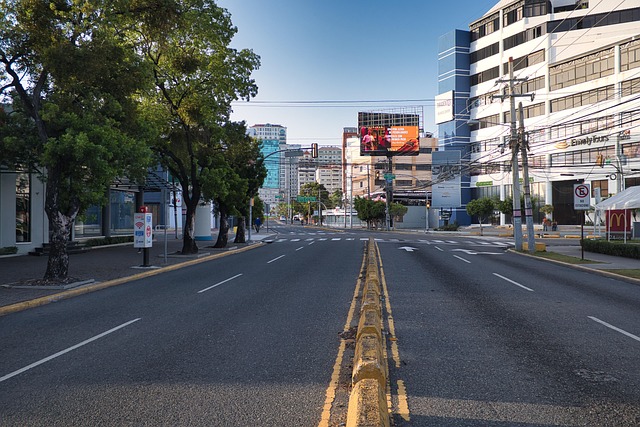
The lockdowns did not just slow the economy. They rewired it overnight.
Naseer and her colleagues documented a cascade that began with mobility. "Most countries have implemented full or partial lockdown measures to slow the spread of disease," they wrote. "The lockdown has slowed global economic activity substantially" (Naseer et al., 2023). That sentence is clinical. The reality was not.
In the first two weeks of April 2020, global air travel dropped 95 percent. The S&P 500 fell 34 percent in five weeks. Oil prices went negative for the first time in history. The U.S. unemployment rate hit 14.8 percent in April 2020, a level not seen since the Great Depression. But here is the part that makes the WWII comparison stick: the damage was not just to demand. It was to the machinery that produces everything.
Manufacturing: The Silent Stop
Factories did not just close. They became epidemiological problems. In China, where the outbreak began, industrial production fell 13.5 percent in January and February 2020 compared to the same period in 2019. That was not a demand shock. That was a supply chain seizure. A single factory in Wuhan that produced 80 percent of the world's steering wheel components for a major automaker shut down. Assembly lines in Germany, Mexico, and the United States stopped within days.
Naseer et al. (2023) found that "many companies have reduced operations or closed down." That understates it. The authors were watching a synchronized global shutdown of production capacity that had no peacetime precedent. The closest analog was the conversion of civilian factories to wartime production in 1941, but that was a shift, not a stop.
Services: The Invisible Economy Vanishes
Manufacturing at least had supply chains to blame. Services had no such excuse. They just evaporated.
Restaurants, hotels, airlines, and entertainment venues lost their revenue streams overnight. The authors noted that "service providers are also affected, in addition to manufacturers" (Naseer et al., 2023). That sentence hides a staggering asymmetry. In the United States, the leisure and hospitality sector lost 8.3 million jobs in April 2020 alone. That was 49 percent of all jobs in that sector. The entire industry halved in a month.
The authors also flagged something that got less attention: the sports and entertainment industries collapsed simultaneously. The NBA suspended its season on March 11, 2020. The Premier League followed on March 13. The 2020 Summer Olympics in Tokyo, already the most expensive Games in history at $15.4 billion, were postponed. Broadway went dark. Movie theaters closed. The global entertainment economy, worth over $2 trillion in 2019, essentially flatlined.
The Food System Did Not Break. It Buckled.

This is where the paper gets unsettling. Most coverage of the economic shock focused on white collar workers Zooming from home and blue collar workers getting laid off. Naseer et al. (2023) also looked at agriculture and the food industry. What they found was not a failure of production. It was a failure of distribution.
Farmers in the United States were plowing under vegetables and dumping milk. Not because nobody wanted the food. Because the supply chains that moved food from farms to restaurants, schools, and stadiums had collapsed. The authors documented a "decline in education" as schools closed, which also meant millions of children who relied on school meals lost access. The food system produced enough. It just could not get the food to the people who needed it.
This was a structural vulnerability that the WWII comparison makes visible. During World War II, the U.S. government centralized food distribution through the War Food Administration. In 2020, there was no equivalent. The system was optimized for efficiency, not resilience. When one node failed, the whole thing seized.
The Labor Market: Not Just Unemployment, But a Different Kind of Unemployment
The paper's authors found that "people are losing their jobs at an increasing rate" (Naseer et al., 2023). That is true, but it misses the weirdness of what actually happened.
In the United States, 22 million jobs were lost in March and April 2020. But by July 2020, 9.3 million of those jobs had come back. The recovery was faster than any previous recession, but it was also deeply uneven. The bottom half of the income distribution lost jobs at four times the rate of the top quartile. Service workers, women, and people of color bore the brunt.
The WWII comparison works here too, but in a different way. During World War II, the U.S. labor force underwent a massive structural shift as women entered factories and men went to war. In 2020, the shift was from in person work to remote work. But the authors' data shows that the shift was not a choice. It was a forced migration. And millions of workers in sectors that could not go remote just lost their jobs entirely.
Education: The Hidden Economic Scar
One of the paper's most underappreciated findings is the "decline in education" (Naseer et al., 2023). This is not just about learning loss. It is about the economic function of schools as childcare, as meal providers, and as social stabilizers.
When schools closed in March 2020, 1.6 billion children in 190 countries were affected. Parents, disproportionately mothers, left the workforce to care for them. The U.S. labor force participation rate for women dropped to 57 percent in April 2020, the lowest since 1988. The economic damage from school closures was not just the lost wages of parents. It was the long term reduction in human capital for a generation of students.
The authors do not model this directly, but the implication is clear. The economic shock of COVID was not a single quarter of bad GDP numbers. It was a multiyear disruption to the systems that produce future workers.
The Trade Collapse
"World trade situation is expected to deteriorate substantially this year," the authors wrote (Naseer et al., 2023). That was an understatement.
Global trade fell by 5.3 percent in 2020, according to the WTO. But that aggregate number hides the shape of the collapse. Trade in goods fell sharply in the first half of 2020, then rebounded. Trade in services, particularly travel and tourism, collapsed and stayed collapsed. International tourism arrivals fell 74 percent in 2020, a loss of $1.3 trillion in export revenue.
The authors' focus on trade is important because it connects the COVID shock to the WWII comparison. World War II fundamentally rewired global trade patterns. The Bretton Woods system, the Marshall Plan, and the General Agreement on Tariffs and Trade all emerged from the wreckage. COVID did not produce a new trade architecture. It revealed how fragile the existing one was.
What the Paper Does Not Prove
Naseer et al. (2023) is a review paper. It synthesizes existing data and reports. It does not run original econometric models or conduct new surveys. That means it has limits.
The paper does not quantify the long term scarring effects of the pandemic on potential GDP. It does not model the distributional consequences across income groups or countries. It does not test causal claims about which policies worked best. The authors describe what happened. They do not explain why it happened with the precision of a structural model.
This is not a weakness. It is a choice. The paper is meant to be a visual overview, a map of the damage. But readers should know that the map is not the territory. The paper tells you where the bombs fell. It does not tell you how to rebuild the city.
There is also an open question the authors do not address: was the COVID shock truly comparable to WWII, or just the worst since then? The Great Depression was worse in terms of duration and depth. But the speed of the COVID collapse was unprecedented. The U.S. economy lost 22 million jobs in two months. During the Great Depression, it took four years to lose 15 million. The authors' WWII comparison works because of the simultaneity of the shock, not just its magnitude.
What This Actually Means
The paper by Naseer, Khalid, Parveen, and Abbass is not a policy brief. It is a document of what happened. But reading it with clear eyes, four things become actionable.
- ▸The next pandemic will hit the same structural vulnerabilities. The paper shows that the damage was not random. It concentrated in service sectors, supply chain dependent manufacturing, and in person education. Any country that does not build redundancy into these systems will repeat the collapse.
- ▸The food system needs a distribution backup, not just more production. The authors documented a paradox: food was available, but people could not get it. Emergency food distribution networks, school meal continuity plans, and direct to consumer infrastructure should be pre built, not improvised.
- ▸The labor market shock was not a single event. It was a cascade. The paper shows that job losses in one sector (services) triggered losses in others (manufacturing, trade). Policy responses need to anticipate these second order effects, not just respond to the initial wave.
- ▸The education disruption will have economic consequences for decades. The authors flagged the decline in education, but the paper does not model the long term GDP loss from reduced human capital. That loss is real. It is also largely ignored in pandemic preparedness budgets. A country that does not plan for school continuity during a health emergency is planning for a smaller future economy.
The COVID shock was not a natural disaster. It was a systems failure. Naseer and her colleagues documented the failure with clarity. The question now is whether we read the report or just file it.
References
- [1]Saira Naseer, Sidra Khalid, Summaira Parveen, Kashif Abbass (2023). COVID-19 outbreak: Impact on global economy. Frontiers in Public HealthDOI· 359 citations