The Algorithm That Knows You Better Than You Know Yourself

Imagine this: you are standing in a grocery store, staring at a shelf of pasta sauces. You have no strong preference. You grab the one with the basil on the label, the one your hand reached for first. You think you made a choice.
But what if the choice was already made for you, hours before you walked through the door?
That is not a dystopian fantasy. It is the logical endpoint of a shift that is already underway. According to a landmark framework by Thomas Davenport and his colleagues, artificial intelligence is not just getting better at predicting what you will buy. It is getting better at predicting what you will want before you even know you want it (Davenport et al., 2019). And the most unsettling part? The research suggests this is not about manipulation. It is about a fundamental mismatch between what our brains tell us we want and what our behavior actually reveals.
The Three Dimensions That Rewrite the Rules
Davenport, Guha, Grewal, and Breßgott did not just write another paper about how AI will change marketing. They built a framework that forces us to think differently about what intelligence actually means in a commercial context. The paper, published in the Journal of the Academy of Marketing Science and cited over 2,200 times, proposes that AI's impact depends on three things: the level of intelligence the system has, the type of task it is performing, and whether it is embedded in a physical robot or lives purely in software (Davenport et al., 2019).
Most previous research only looked at one or two of these dimensions. The authors integrated all three. And that integration reveals something strange: the most powerful AI systems are not the ones that replace human judgment. They are the ones that augment it.
How to Build a Machine That Predicts Your Future Self
The authors describe a spectrum of AI intelligence levels. At the low end, you have systems that simply automate repetitive tasks. Think of the algorithm that sorts your email into spam and inbox. At the high end, you have systems that learn, adapt, and make decisions in novel situations. Think of a recommendation engine that notices you bought a cookbook, then a set of knives, then a cast iron pan, and starts suggesting recipes you have never searched for.
The key insight is that these systems do not need to be conscious. They do not need to understand why you want something. They just need to be better than you at predicting what your future self will do (Davenport et al., 2019).
The authors base this on a simple but powerful observation: human decision making is noisy. We are influenced by mood, by the time of day, by the color of the packaging. AI systems, by contrast, can sift through thousands of data points about your past behavior and find patterns you never noticed. They can see the shape of your desires before you have formed the thought.
The Robot That Sells You a Mattress at 2 AM
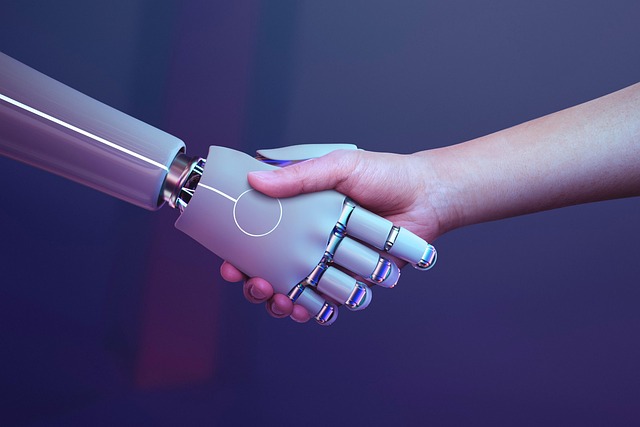
One of the most concrete predictions in the paper involves physical robots. The authors argue that when AI is embedded in a robot, the effect is different from when it lives on a screen. A robot can touch you. It can hand you a product. It can make eye contact (or something like it). And that changes everything about how you respond (Davenport et al., 2019).
Consider the implications. A robot in a store does not just recommend a mattress. It can watch your posture, notice you rubbing your neck, and offer to show you a pillow that matches your sleeping position. It can do all of this without you saying a word. The AI is reading your body language, your micro expressions, your hesitation. It knows you are tired before you admit it to yourself.
The authors are careful to note that this is not science fiction. These systems exist in prototype form in luxury retail and high end automotive showrooms. The question is not whether they will spread. It is how quickly, and with what consequences.
The Privacy Paradox You Are Already Living In
Here is where the paper gets uncomfortable. Davenport and his colleagues do not just describe the technical capabilities of AI. They also outline a research agenda that forces us to confront the ethical questions. And the central question is this: how much do we really want a machine to know about us?
The authors point out that AI systems require massive amounts of personal data to function. The more data they have, the better they get at prediction. But the better they get at prediction, the more they intrude on what we consider private (Davenport et al., 2019). There is a fundamental tension here. We want the convenience of a system that knows what we need. We do not want the creepiness of a system that knows what we have not told anyone.
The paper does not resolve this tension. But it does something more valuable. It names it. And it calls for research into how consumers actually feel about being predicted, as opposed to being marketed to.
What the Research Does Not Prove
The authors are careful not to overclaim. They do not argue that AI will replace human marketers or human salespeople. In fact, they explicitly argue the opposite: AI will be more effective when it augments human managers rather than replaces them (Davenport et al., 2019).
This is a crucial distinction. The paper is not about machines taking over. It is about machines making humans better at their jobs. A salesperson with an AI assistant that whispers recommendations in their ear is more effective than a salesperson working alone. But a salesperson replaced by a robot is a different story. The authors suggest that the former scenario is more likely and more profitable.
They also do not address a deeper question: what happens when the AI is wrong? If a system predicts you will want something and you do not, who is responsible? The algorithm? The company that deployed it? The human who approved the design? These are open questions, and the paper acknowledges them without pretending to have answers.
The Augmentation Thesis
The most provocative claim in the paper is also the most counterintuitive. In an era of rapid automation, the authors argue that the best use of AI is not to replace human judgment but to enhance it (Davenport et al., 2019). This is not a sentimental argument about the value of human touch. It is a practical argument about efficiency.
Consider a marketing manager trying to decide which customers to target with a new product. A human alone might rely on intuition, experience, and demographic data. An AI alone might optimize for click through rates and ignore brand loyalty. But a human working with an AI can do both. The AI handles the pattern recognition. The human handles the strategic context.
The authors call this "augmented intelligence." And they argue that it is the most likely path forward, not because it is nicer, but because it works better.
What This Actually Means
The paper by Davenport and his colleagues is not a prediction. It is a map. And maps are useful only if you know where you are standing. Here is what the map tells us:
- ▸The most powerful AI systems in marketing will not try to convince you to buy something. They will try to predict what you already want, often before you know it yourself. This changes the game from persuasion to prediction.
- ▸Physical robots with AI will have a fundamentally different impact than software alone. The ability to read body language and physical cues gives robots an advantage in certain contexts, especially high consideration purchases like cars or furniture.
- ▸The privacy question is not a side issue. It is the central tension that will determine how quickly and how widely these systems are adopted. Consumers will tolerate prediction only up to a point. Finding that point is the critical research challenge.
- ▸Augmentation, not replacement, is the likely outcome for most marketing roles. The human manager with an AI assistant will outperform both the human alone and the AI alone. This is not a feel good story. It is a finding grounded in the structure of how decisions are made.
- ▸The ethical questions are not solved. Bias, privacy, and the potential for manipulation are real. The paper calls for more research, but the implication is clear: we are building these systems now, and we are doing it without a clear ethical framework.
The grocery store aisle is about to get a lot more interesting. And the person deciding which sauce you buy might not be a person at all. It might be a system that knew what you wanted before you ever reached for the basil.
References
- [1]Thomas H. Davenport, Abhijit Guha, Dhruv Grewal, Timna Breßgott (2019). How artificial intelligence will change the future of marketing. Journal of the Academy of Marketing ScienceDOI· 2,260 citations