
The Robot That Learned to Want Things
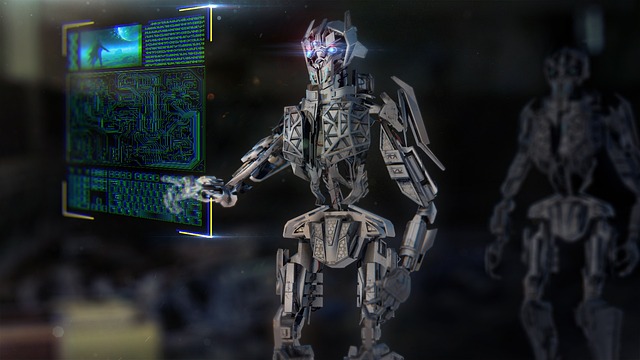
The first time a robot picks up an object it has never seen before, something shifts. Not in the robot. In the person watching. Because for decades, robots have been excellent at doing exactly what they were told, exactly how they were told, in exactly the place they were told to do it. They were precision machines, not learners. They could weld a car door 10,000 times without a single deviation, but hand them a coffee mug that was slightly larger than expected, and they would crush it.
That is the old story. The new story, as Mohsen Soori, Behrooz Arezoo, and Roza Dastres from the Amirkabir University of Technology lay out in their 2023 review, is that artificial intelligence, machine learning, and deep learning have fundamentally rewired what a robot can be (Soori et al., 2023). They have turned rigid machines into adaptive systems. They have given robots something that looks, from the outside, like curiosity.
The authors reviewed the entire landscape of how AI, ML, and DL are being applied to advanced robotics systems, from factory floors to airplane cockpits to taxis. What they found is not a single breakthrough but a quiet transformation happening across dozens of fields at once. Robots are no longer just following code. They are learning from data. They are making decisions. They are, in a meaningful sense, thinking about what to do next.
What Changes When a Robot Can Learn

The core insight of the Soori review is deceptively simple: traditional robots are programmed, but AI powered robots are trained. That difference changes everything.
A programmed robot receives explicit instructions for every possible action. If the programmer did not anticipate a situation, the robot has no way to handle it. A trained robot, by contrast, is fed thousands or millions of examples and learns the underlying patterns. It does not need to be told "if the cup is tilted 14 degrees, adjust grip pressure by 2 percent." It has seen enough tilted cups to figure that out on its own.
This shift from explicit programming to statistical learning is what makes modern robots capable of things that seemed like science fiction a decade ago. The authors document how this plays out across several specific domains, each with its own set of challenges and breakthroughs.
The Navigation Problem
Autonomous navigation has been a holy grail in robotics for decades. The basic problem is brutal: a robot moving through the world has to process an enormous amount of sensory data, identify obstacles, predict their movement, plan a path, and execute that plan all in real time. One wrong calculation and the robot crashes into a wall, or worse, a person.
Traditional approaches relied on hard coded rules. If sensor reads distance less than X, stop. If path is blocked to the left, turn right. These systems worked in controlled environments but fell apart in the messy, unpredictable real world.
Soori and colleagues describe how deep learning has changed this. Instead of writing rules for every possible scenario, researchers now feed neural networks thousands of hours of driving or walking data. The networks learn to recognize patterns: that a pedestrian about to step off a curb behaves differently from one waiting at a crosswalk, that a ball bouncing into the street means a child might follow, that wet pavement changes stopping distances.
The result is not perfect. Autonomous systems still make mistakes. But the rate of improvement has been staggering. Each new training dataset makes the system slightly better at predicting what comes next.
The Grasping Problem
Picking up objects seems trivial to humans. We do it without thinking, adjusting our grip automatically for a heavy book versus a fragile egg, a smooth metal rod versus a fuzzy tennis ball. For robots, this is one of the hardest problems in existence.
Every object has a different weight, texture, shape, and center of mass. A robot that knows how to pick up a coffee mug may fail completely when asked to pick up a wine glass. The geometry is similar, but the fragility is different. The weight distribution is different. The friction coefficient of the surface is different.
Machine learning has cracked this open. The Soori review documents how deep learning models trained on millions of grasp attempts have learned to predict, in milliseconds, the optimal grip for objects they have never encountered before. The robot looks at the object, runs it through a neural network that has internalized the physics of hundreds of thousands of previous grasps, and generates a grip that works.
The authors note that this capability is transforming manufacturing assembly robots. Instead of being limited to handling identical parts, these robots can now adapt to variations in materials, tolerances, and orientations. They can work with parts that arrive slightly misaligned or with surface imperfections. They can even handle objects made of soft or deformable materials, which had been nearly impossible for traditional rigid grippers.
The Cobot Revolution

One of the most interesting threads in the Soori review is the discussion of collaborative robots, or cobots. These are robots designed to work alongside humans, not in cages or behind safety barriers.
Traditional industrial robots are dangerous. They move fast, they have enormous force, and they cannot sense when a person is in the way. That is why they are always isolated behind fences or light curtains. If a human enters the robot's workspace, everything stops.
Cobots are different. They use AI to sense their environment and adapt their behavior accordingly. They slow down when a person approaches. They stop if they detect unexpected resistance. They can even learn from watching a human demonstrate a task, picking up the sequence of movements and then executing them autonomously.
The authors describe how this changes the economics of automation. Traditional robots require expensive safety infrastructure and dedicated programming. Cobots can be deployed more quickly, moved between tasks more easily, and operated by workers who are not robotics experts. A small manufacturer that could never justify a full automation line can now put a cobot on a single workbench and have it assist with repetitive tasks while the human handles the complex decisions.
But the review also makes clear that cobots are not replacements for humans. They are tools that augment human capability. The most effective cobot applications are those where the robot handles precision, repetition, and heavy lifting while the human provides judgment, problem solving, and adaptability. It is a partnership, not a takeover.
Natural Language: The Interface Nobody Taught
Perhaps the most surprising section of the Soori review is the discussion of natural language processing in robotics. For a long time, the idea of talking to a robot seemed like a gimmick. You could say "move left" or "stop" and the robot would obey, but the interaction was brittle and limited.
Deep learning has changed that. Modern NLP models can understand complex, ambiguous commands. A robot can be told "bring me the tool that is on the workbench next to the blue box" and parse the sentence into a sequence of actions: identify the workbench, locate the blue box, find the tool next to it, pick it up, navigate to the person who spoke, and hand it over.
The authors note that this capability is still in its early stages, but the trajectory is clear. Natural language is becoming a viable control interface for robots. Instead of needing to learn a programming language or a set of gestures, a person can simply tell the robot what to do. This dramatically lowers the barrier to using robots in settings where specialized training is impractical, such as homes, hospitals, or small workshops.
The Predictive Maintenance Surprise
One of the most practical applications the review covers has nothing to do with what robots do in the moment. It is about keeping them working over time.
Predictive maintenance uses machine learning to analyze sensor data from robots and predict when components are likely to fail. Vibration patterns, temperature readings, current draw, acoustic signatures all of these can be fed into models that learn the early warning signs of bearing wear, motor degradation, or joint fatigue.
The authors describe how this shifts maintenance from a reactive or scheduled model to a predictive one. Instead of replacing parts on a fixed calendar whether they need it or not, or waiting until something breaks, companies can replace parts just before they are likely to fail. This reduces downtime, extends component life, and lowers costs.
The interesting twist is that predictive maintenance systems get better over time. Each failure that the system predicts correctly, or misses, becomes a training example that improves the next prediction. The system learns from its own mistakes. This is a form of continuous improvement that traditional maintenance approaches cannot match.
What the Review Does Not Prove
The Soori review is comprehensive, but it is also honest about its limitations. The authors explicitly call for more research to fill gaps between existing studies. Here is what the review does not tell us.
First, it does not provide controlled comparisons of different AI approaches across applications. The field is moving too fast for that. A technique that works brilliantly for object recognition may fail for navigation. The review documents what is being tried, but it cannot yet say what works best.
Second, the review does not address the data requirements of these systems. Deep learning models need enormous amounts of training data. For many robotic applications, that data is expensive or dangerous to collect. A robot learning to grasp objects can break a lot of objects and damage itself in the process. Simulated training data helps, but there is always a gap between simulation and reality.
Third, the review does not resolve the safety and reliability questions that these systems raise. A robot that learns from data can behave in unexpected ways. It can discover strategies that its programmers never anticipated. Sometimes those strategies are brilliant. Sometimes they are dangerous. The field has not yet developed robust methods for verifying that a learned behavior is safe in all circumstances.
Fourth, the review does not quantify the economic impact of these technologies. It is clear that AI powered robots are becoming more capable, but it is less clear how quickly they will be adopted, which industries will benefit most, and what the employment effects will be. These are questions for economists and policy makers, not just engineers.
The Transportation Transformation
The Soori review gives special attention to transportation applications, and for good reason. Autonomous vehicles, drones, and intelligent traffic systems represent some of the most visible and high stakes deployments of AI in robotics.
The authors describe how AI, ML, and DL are being used in advanced transportation systems to provide safety, efficiency, and convenience. Self driving cars use deep learning to process camera and lidar data, identify objects, predict their trajectories, and make driving decisions. Traffic management systems use machine learning to optimize signal timing, reduce congestion, and predict accident hotspots.
Aviation is another area where the impact is significant. The authors document how AI is being used in aviation management to improve efficiency, reduce costs, and enhance customer satisfaction. From predictive maintenance of aircraft components to optimized flight routing to personalized passenger services, the applications are multiplying.
Even taxi companies are being transformed. The review notes that AI and ML can help taxi companies provide better, more efficient, and safer services. This includes dynamic pricing, optimized dispatching, and predictive demand modeling. The same technologies that power ride hailing apps are being applied to traditional taxi fleets.
What This Actually Means
The Soori review is not a prediction about the future. It is a documentation of what is already happening. Here is what that means in practical terms.
- ▸The robot you interact with in five years will not be programmed by a person. It will have been trained on data. This changes who can build and deploy robots. It shifts the bottleneck from programming skill to data availability and computing power. Companies with the best data, not the best programmers, may have the advantage.
- ▸Collaborative robots will enter small and medium businesses before they enter homes. The economics work better. A cobot that costs as much as a skilled worker but never gets tired, never asks for a raise, and never calls in sick makes financial sense for a manufacturer. A home robot that can fold laundry and wash dishes is still too expensive and unreliable for most households.
- ▸Natural language will become the primary interface for robot control. The days of needing to learn a programming language or a complex control scheme to operate a robot are ending. You will tell the robot what to do. It will figure out the details.
- ▸Predictive maintenance will become standard for industrial robots. The cost savings are too large to ignore. Companies that do not adopt predictive maintenance will find themselves at a competitive disadvantage as their competitors experience less downtime and lower maintenance costs.
- ▸The biggest open question is safety. A robot that learns from data can surprise you. Sometimes that surprise is a delightful new capability. Sometimes it is a dangerous failure. The field needs better methods for testing and verifying learned behaviors before they are deployed in environments where people are present.
The Soori review makes one thing clear: the merging of AI and robotics is not a future event. It is happening now, in factories, on roads, in warehouses, and in laboratories. The robots are learning. They are adapting. They are getting smarter. And they are not going back to the way things were.
References
- [1]Mohsen Soori, Behrooz Arezoo, Roza Dastres (2023). Artificial intelligence, machine learning and deep learning in advanced robotics, a review. Cognitive RoboticsDOI· 1,020 citations